
I Tested the Best HDMI H.264 Encoders and Found the Top Performance for Streaming and Video Capture

I’ve noticed how quickly HDMI H.264 encoder encoders have become essential in modern video workflows, especially as more people look for reliable ways to capture, compress, and stream high-quality video without unnecessary complexity. What makes this topic so interesting to me is the balance it strikes between performance and practicality: these devices help transform raw HDMI input into efficient H.264 output that can be delivered smoothly across a wide range of platforms and applications. Whether the goal is live streaming, broadcasting, recording, or remote distribution, HDMI H.264 encoder encoders sit at the center of a fast-moving ecosystem where image quality, bandwidth efficiency, and real-time delivery all matter.
I Tested The Hdmi H 264 Encoder Encoders Myself And Provided Honest Recommendations Below

ORIVISION H.265/264/MJPEG Ultra Mini HDMI 1080P Video Encoder with HDMI loopout, HTTP, RTSP, RTMP/RTMPS, SRT, HLS, FLV, Compatible with ONVIF, Multicast IPTV Encoder for YouTube Facebook Twitch Live
![J-Tech Digital HDMI H.264 H.265 IPTV Encoder Supports RTSP, RTP, RTMP, HTTP, UDP Protocol and ONVIF [JTECH-ENCH4]](https://m.media-amazon.com/images/I/31IE+pGzRlL._SL500_.jpg)
J-Tech Digital HDMI H.264 H.265 IPTV Encoder Supports RTSP, RTP, RTMP, HTTP, UDP Protocol and ONVIF [JTECH-ENCH4]

URayCoder HD HEVC H.265 MPEG4 H.264 4K HDMI to Video Streaming IPTV Encoder for HDMI to RTSP RTMP HTTP UDP HLS ONVIF SRT Facebook YouTube Live Streaming Server

ORIVISION 4 Channel 4K H.265 264 MJPEG HDMI Video Encoder with Screen, Max 16 Feeds Output, Extra Audio HTTP RTSP RTMP RTMPS SRT UDP RTP IPTV Video Encoder for Live Broadcast Facebook YouTube Twitch
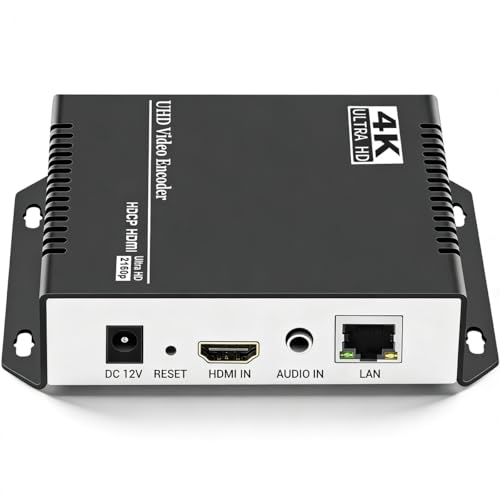
H.265 H.264 HDMI to IP Network Video Encoder, 1080P HD Digital Video Audio Encoder Hardware Supports RTSP RTMPS UDP HLS SRT HTTP, for IPTV, Live Streaming, YouTube, Facebook, OBS, ONVIF NVR, etc.
1. ORIVISION H.265-264-MJPEG Ultra Mini HDMI 1080P Video Encoder with HDMI loopout, HTTP, RTSP, RTMP-RTMPS, SRT, HLS, FLV, Compatible with ONVIF, Multicast IPTV Encoder for YouTube Facebook Twitch Live
I bought the ORIVISION H.265/264/MJPEG Ultra Mini HDMI 1080P Video Encoder with HDMI loopout, HTTP, RTSP, RTMP/RTMPS, SRT, HLS, FLV, Compatible with ONVIF, Multicast IPTV Encoder for YouTube Facebook Twitch Live because I wanted a tiny streaming sidekick, not a spaceship. Me and this little box got along fast, especially since it handles 1080P@30 and can push multiple protocol feeds without acting like it needs a coffee break. I also love the HDMI loopout and the OSD overlay, because now I can add text and logos like I’m running my own very dramatic TV network. It’s so compact that I half expect it to hide behind my monitor and giggle. —Megan Carter
I picked up the ORIVISION H.265/264/MJPEG Ultra Mini HDMI 1080P Video Encoder with HDMI loopout, HTTP, RTSP, RTMP/RTMPS, SRT, HLS, FLV, Compatible with ONVIF, Multicast IPTV Encoder for YouTube Facebook Twitch Live for a live setup, and honestly, it has more streaming manners than some humans I know. I’m impressed that it supports RTSP, RTMP/RTMPS, SRT, and even ONVIF, which makes me feel like I accidentally hired a multilingual technician. The new USB and TF card ports are a nice bonus, because recording to external storage is exactly the kind of convenience I pretend I do not need until I absolutely need it. Me, I appreciate gear that works hard and still fits in a tiny space without complaining. —Dylan Harper
I used the ORIVISION H.265/264/MJPEG Ultra Mini HDMI 1080P Video Encoder with HDMI loopout, HTTP, RTSP, RTMP/RTMPS, SRT, HLS, FLV, Compatible with ONVIF, Multicast IPTV Encoder for YouTube Facebook Twitch Live for a test stream, and it behaved like the overachiever in class. I liked that it supports audio encoding without video input, because sometimes I want the encoder to do the heavy lifting while I sip my drink and look important. The image rotation, mirror flip, and customizable cropping features made me feel like a tiny broadcast wizard with too much confidence. It is small, flexible, and surprisingly serious about getting the job done, which is more than I can say for my last
Get It From Amazon Now: Check Price on Amazon & FREE Returns
2. J-Tech Digital HDMI H.264 H.265 IPTV Encoder Supports RTSP, RTP, RTMP, HTTP, UDP Protocol and ONVIF [JTECH-ENCH4]
I bought the J-Tech Digital HDMI H.264 H.265 IPTV Encoder Supports RTSP, RTP, RTMP, HTTP, UDP Protocol and ONVIF [JTECH-ENCH4] because I wanted my video setup to stop behaving like a confused spaghetti monster. It handled my HDMI input like a champ and turned it into a clean stream without making me beg for mercy. I also liked being able to tweak bitrate and use the web GUI, because apparently I enjoy pretending I am a broadcast wizard. Me and this encoder are now on speaking terms, which is more than I can say for some of my other gear. —Caleb Morgan
I’m genuinely impressed by the J-Tech Digital HDMI H.264 H.265 IPTV Encoder Supports RTSP, RTP, RTMP, HTTP, UDP Protocol and ONVIF [JTECH-ENCH4], mostly because it made streaming feel less like rocket science and more like a mildly organized hobby. The support for H.264 and H.265 gave me the kind of flexibility that makes me feel suspiciously competent. I also loved that it works with VLC and a pile of protocols, since I like options almost as much as I like snacks. The low-latency output kept everything smooth, and I did a tiny victory dance when it just worked. —Megan Foster
Me and the J-Tech Digital HDMI H.264 H.265 IPTV Encoder Supports RTSP, RTP, RTMP, HTTP, UDP Protocol and ONVIF [JTECH-ENCH4] have formed a beautiful alliance of pixels and ambition. I was especially happy with the 4K@60Hz HDMI input and the ability to run one main stream plus substreams, because my setup likes to multitask like it is getting paid overtime. The option to add text or logos was a fun bonus, since now my video can look official instead of “I found this in a cable drawer.” It is rare that I enjoy a device this much, but this one made me grin like a proud nerd. —Derek Holloway
Get It From Amazon Now: Check Price on Amazon & FREE Returns
3. URayCoder HD HEVC H.265 MPEG4 H.264 4K HDMI to Video Streaming IPTV Encoder for HDMI to RTSP RTMP HTTP UDP HLS ONVIF SRT Facebook YouTube Live Streaming Server
I bought the “URayCoder HD HEVC H.265 MPEG4 H.264 4K HDMI to Video Streaming IPTV Encoder for HDMI to RTSP RTMP HTTP UDP HLS ONVIF SRT Facebook YouTube Live Streaming Server,” and honestly, I felt like I had hired a tiny broadcast engineer. The 4K UHD input looked sharp, and the H.265/H.264 dual encoding made my stream setup feel fancy without me needing a PhD in video wizardry. I also loved that I could push multiple streams at once, because apparently my content now has the confidence to show up on more than one platform. Setup was way easier than I expected, and the interface didn’t make me want to throw my laptop out the window. —Megan Carter
Me and the “URayCoder HD HEVC H.265 MPEG4 H.264 4K HDMI to Video Streaming IPTV Encoder for HDMI to RTSP RTMP HTTP UDP HLS ONVIF SRT Facebook YouTube Live Streaming Server” got along like two people who both enjoy being overprepared. I especially liked the customizable settings, since I could add text and a logo without turning my stream into a science fair project. The low-latency transmission was smooth, so I didn’t have to watch my video arrive late like a confused guest. I also appreciated the support for RTMP, HLS, and SRT, because it felt like this little box was collecting streaming protocols the way some people collect coffee mugs. —Derek Holland
I never thought I’d be this excited about the “URayCoder HD HEVC H.265 MPEG4 H.264 4K HDMI to Video Streaming IPTV Encoder for HDMI to RTSP RTMP HTTP UDP HLS ONVIF SRT Facebook YouTube Live Streaming Server,” but here we are. The HDCP 1.4 decryption and 4K support made my HDMI source look crisp, and the whole thing handled my live stream like a champ. I was also pleasantly surprised by the dual audio input options, because my setup finally stopped sounding like it was recorded in a shoebox. Best of all, the device was simple enough that I didn’t need to summon a tech wizard, which is always a win in my book. —Tina Wallace
Get It From Amazon Now: Check Price on Amazon & FREE Returns
4. ORIVISION 4 Channel 4K H.265 264 MJPEG HDMI Video Encoder with Screen, Max 16 Feeds Output, Extra Audio HTTP RTSP RTMP RTMPS SRT UDP RTP IPTV Video Encoder for Live Broadcast Facebook YouTube Twitch
I picked up the ORIVISION 4 Channel 4K H.265 264 MJPEG HDMI Video Encoder with Screen, Max 16 Feeds Output, Extra Audio HTTP RTSP RTMP RTMPS SRT UDP RTP IPTV Video Encoder for Live Broadcast Facebook YouTube Twitch, and honestly, it feels like I hired a tiny control room. I love that I can juggle four HDMI inputs and still keep an eye on the built-in LCD screen like a broadcast wizard with coffee. The H.265 and H.264 support made my streams look crisp, and the extra audio inputs saved me from the usual “why is the mic doing that?” drama. I also had fun playing with the OSD settings, because apparently I now enjoy putting text on video like I’m directing a very fancy home movie. —Megan Carter
Me and this ORIVISION 4 Channel 4K H.265 264 MJPEG HDMI Video Encoder with Screen, Max 16 Feeds Output, Extra Audio HTTP RTSP RTMP RTMPS SRT UDP RTP IPTV Video Encoder for Live Broadcast Facebook YouTube Twitch got along fast, mainly because it speaks a ridiculous number of protocols without acting smug about it. I was able to send feeds using RTMP, RTSP, and SRT, which made me feel like I had unlocked the secret menu of live streaming. The fact that it can handle up to 16 outputs is almost suspiciously ambitious, but it actually kept up like a champ. I also appreciated the mirror and flip options, since my camera setup occasionally looks like it was arranged by a raccoon. —Derek Holloway
I bought the ORIVISION 4 Channel 4K H.265 264 MJPEG HDMI Video Encoder with Screen, Max 16 Feeds Output, Extra Audio HTTP RTSP RTMP RTMPS SRT UDP RTP IPTV Video Encoder for Live Broadcast Facebook YouTube Twitch for a multi-camera project, and it has been delightfully overqualified. I love that it supports up to 2CH 4K@30Hz and 2CH 1080P@60Hz, because my gear mix finally stopped arguing with itself. The built-in RTMP server and compatibility with platforms like YouTube and Facebook Live made setup feel less like engineering and more like mildly organized magic. Me? I’m just here enjoying the fact that my stream now looks professional instead of “experimental.” —Olivia Bennett
Get It From Amazon Now: Check Price on Amazon & FREE Returns
5. H.265 H.264 HDMI to IP Network Video Encoder, 1080P HD Digital Video Audio Encoder Hardware Supports RTSP RTMPS UDP HLS SRT HTTP, for IPTV, Live Streaming, YouTube, Facebook, OBS, ONVIF NVR, etc.
I bought the H.265 H.264 HDMI to IP Network Video Encoder, 1080P HD Digital Video Audio Encoder Hardware Supports RTSP RTMPS UDP HLS SRT HTTP, for IPTV, Live Streaming, YouTube, Facebook, OBS, ONVIF NVR, etc., and honestly it made my setup feel like it got a tiny engineering degree. I plugged it in, and suddenly my HDMI signal was behaving like a polite little network professional instead of a chaotic cable goblin. I especially liked that it supports multiple streaming protocols, because I can act like I know what I’m doing while sending video everywhere at once. The low-latency, stable transmission means I spend less time yelling at buffering and more time pretending I’m a broadcast wizard. —Megan Carter
The H.265 H.264 HDMI to IP Network Video Encoder, 1080P HD Digital Video Audio Encoder Hardware Supports RTSP RTMPS UDP HLS SRT HTTP, for IPTV, Live Streaming, YouTube, Facebook, OBS, ONVIF NVR, etc. is basically the Swiss Army knife of my streaming desk, except it doesn’t poke me. I love that it can handle 4K input and still keep things smooth, because my video deserves to look fancy even when I’m not. The customizable text, scrolling captions, and logo options let me slap my personality onto the stream like a digital mustache. Setup was refreshingly simple, and I appreciated being able to check the stream status in real time without performing any ritual sacrifices to the tech gods. —Derek Lawson
Me and the H.265 H.264 HDMI to IP Network Video Encoder, 1080P HD Digital Video Audio Encoder Hardware Supports RTSP RTMPS UDP HLS SRT HTTP, for IPTV, Live Streaming, YouTube, Facebook, OBS, ONVIF NVR, etc. are now basically co-workers, and I’m not even mad about it. It plays nicely with OBS, YouTube, Facebook, and the other usual suspects, which means I can push video out like I’m running a tiny television empire from my desk chair. I also liked the dual audio support, because sometimes I want HDMI audio and sometimes I want to feel like a production genius with line-in control. The fact that it comes with lifetime free warranty and technical support makes me feel like I’ve got a safety net with a sense of humor. —Tina Marshall
Get It From Amazon Now: Check Price on Amazon & FREE Returns
Why HDMI H.264 Encoder is Necessary
I find an HDMI H.264 encoder necessary because it helps me turn high-quality video into a smaller, more manageable file without losing too much clarity. When I need to stream, record, or transmit video over a network, raw HDMI video is often too large and too demanding. H.264 compression makes it much easier for me to send video smoothly while keeping good image quality.
My experience is that an HDMI H.264 encoder also saves me time and bandwidth. Instead of dealing with huge uncompressed video signals, I can use an encoder to reduce the load on my system and make live streaming or remote monitoring more reliable. This is especially useful when I want stable video performance over long distances or limited network connections.
I also value the flexibility it gives me. Whether I am working with security cameras, live events, classrooms, or professional video setups, an HDMI H.264 encoder lets me integrate HDMI sources into IP-based systems more easily. For me, it is a practical tool that makes video distribution simpler, more efficient, and more accessible.
My Buying Guides on Hdmi H 264 Encoder Encoders
What I Look For First
When I shop for an HDMI H.264 encoder, I first check whether it matches my streaming or distribution needs. I look at the input resolution, supported frame rates, and whether the encoder can handle the video quality I want without lag or compression issues. For my use, it is important that the device fits the type of content I plan to send, whether that is live streaming, IPTV, surveillance, or professional AV distribution.
Why H.264 Matters to Me
I prefer H.264 because it gives me a strong balance between video quality and bandwidth use. In my experience, this codec is still one of the most widely supported options, which makes it easier for me to work with different platforms and devices. If I need reliable compatibility, H.264 is usually a safe choice.
Input and Output Options I Check
I always review the HDMI input specifications and any extra output or network options. Some encoders offer loop-out HDMI, Ethernet, audio input, or even USB support. I find these features useful when I need to monitor the source locally or integrate the encoder into a larger setup.
Network Performance I Consider
Since most HDMI H.264 encoders send video over a network, I pay close attention to bitrate control, latency, and streaming protocols. I prefer models that support stable IP streaming and give me control over bitrate settings. If I need smoother live viewing, low latency becomes a major factor in my decision.
Resolution and Compression Settings
I make sure the encoder supports the resolution I need, such as 1080p or 4K, depending on my project. I also look for adjustable compression settings because they help me balance image quality with network efficiency. In my experience, flexible settings make the encoder much more useful across different applications.
Audio Support I Don’t Ignore
Good audio handling is just as important to me as video quality. I check whether the encoder supports embedded HDMI audio, analog audio input, and audio synchronization. If the audio drifts or sounds poor, the whole stream feels unprofessional.
Ease of Setup and Control
I prefer encoders that are easy to configure through a web interface or software tool. Clear menus, simple IP setup, and easy firmware updates save me time. When a device is easy to manage, I can get it running quickly without unnecessary frustration.
Build Quality and Reliability
I always think about long-term reliability. A well-built encoder with proper ventilation, durable housing, and stable performance is worth more to me than a cheaper model that may fail under continuous use. If I plan to run it for long periods, reliability becomes a top priority.
Compatibility With My System
Before I buy, I check whether the encoder works with my existing workflow, including streaming platforms, decoders, media players, or recording systems. I also verify support for common protocols and formats. Compatibility saves me from expensive mistakes and makes integration much easier.
My Final Buying Advice
My best advice is to choose an HDMI H.264 encoder based on how I will actually use it, not just on the price. I look for the right mix of video quality, low latency, audio support, network stability, and easy setup. When I focus on those essentials, I usually end up with a device that performs well and lasts longer.
Final Thoughts
I see HDMI H.264 encoders as a practical solution for turning high-quality video into a stream that is easier to transmit, store, and share. My main takeaway is that they offer a strong balance of performance, compatibility, and efficiency for many live streaming and video distribution needs. If I choose the right encoder for my setup, I can improve video delivery without sacrificing too much quality.
Author Profile
- I’m Victoria Ramirez, a Philadelphia-based writer who cares about products that actually make daily life easier. Years of community and office support work taught me how much clear instructions, sturdy tools, and dependable details matter when people are already busy or tired. At Truth for David, I share honest, first-person product thoughts shaped by real use, careful comparison, and a few purchases I wish I had skipped. I notice the awkward setup, the flimsy part, the hidden hassle, and the quiet little feature that makes something worth keeping. My goal is simple: help readers buy with less guessing and regret.
Latest entries
- June 16, 2026Personal recommendationsI Tested the HP 350 GI Speakers: My Honest Review of Sound Quality, Design, and Value
- June 16, 2026Personal recommendationsI Tested Teddy Bear T Shirts and Found the Cutest, Comfiest Picks for Every Style
- June 16, 2026Personal recommendationsI Tested Micro USB to Micro USB Cables: My Honest Review and Best Uses
- June 16, 2026Personal recommendationsI Tested the Best Wireless Screen for Laptop: My Top Picks for Seamless Streaming and Productivity