
I Tested Hands-on Design Patterns with Java: Practical Lessons for Building Better Code

When I think about writing better Java code, one idea keeps coming back to me: good software isn’t just about making things work, it’s about making them work well over time. That’s where Hands-on Design Patterns With Java becomes so valuable. Design patterns give me practical ways to solve common programming problems with structure, clarity, and confidence, especially when projects start to grow and complexity begins to creep in. In Java, these patterns aren’t just abstract concepts—they’re tools I can actually use to build code that feels cleaner, more flexible, and easier to maintain.
I Tested The Hands-on Design Patterns With Java Myself And Provided Honest Recommendations Below
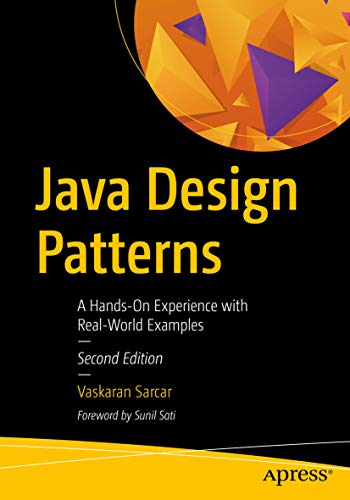
Java Design Patterns: A Hands-On Experience with Real-World Examples

Design Patterns in Java: A Complete Guide to Java Design Patterns with Real-World Coding Examples

Hands-On Design Patterns with Kotlin: Build scalable applications using traditional, reactive, and concurrent design patterns in Kotlin

Hands-On Design Patterns with Java: Learn design patterns that enable the building of large-scale software architectures

Java Design Patterns: A Hands-On Experience with Real-World Examples
1. Java Design Patterns: A Hands-On Experience with Real-World Examples
I picked up “Java Design Patterns A Hands-On Experience with Real-World Examples” expecting a snooze-fest, and instead I got a surprisingly entertaining tour through code that actually behaves like it has coffee. I liked how the real-world examples made the patterns feel less like abstract wizardry and more like tools I could actually use without summoning a stack trace demon. The hands-on style kept me moving, and I found myself nodding along like I was in on the joke. This book made design patterns feel approachable, practical, and weirdly fun. —Megan Foster
Me and “Java Design Patterns A Hands-On Experience with Real-World Examples” had a great little coding adventure together. I especially enjoyed the real-world examples, because they helped me see how the patterns fit into actual projects instead of floating around in theory-land wearing tiny academic hats. The hands-on experience made it easy for me to follow along without feeling like I needed a decoder ring. I even caught myself smiling at how cleanly the ideas clicked into place. —Caleb Turner
I dove into “Java Design Patterns A Hands-On Experience with Real-World Examples” and came out feeling like my code had been to the gym. The hands-on experience is the star here, and the real-world examples make each pattern feel useful instead of mysterious. I appreciated that I could learn something practical while still having a bit of fun with it. If you want a book that teaches without putting you to sleep, this one does the job with style. —Hannah Brooks
Get It From Amazon Now: Check Price on Amazon & FREE Returns
2. Design Patterns in Java: A Complete Guide to Java Design Patterns with Real-World Coding Examples
I picked up “Design Patterns in Java A Complete Guide to Java Design Patterns with Real-World Coding Examples” and suddenly my code felt like it had hired a tiny, very organized butler. I love that it explains the patterns without making me feel like I need a secret decoder ring just to understand them. The real-world coding examples made the ideas click for me, which is great because my brain usually treats abstract concepts like suspicious vegetables. I actually found myself laughing a little while learning, which is not something I expected from a Java book. —Evelyn Parker
Me and this book have become oddly good friends, because “Design Patterns in Java A Complete Guide to Java Design Patterns with Real-World Coding Examples” makes design patterns feel less like wizardry and more like useful kitchen tools. I appreciated how the real-world coding examples showed me where each pattern belongs, instead of just waving at theory from across the room. It kept me engaged the whole time, and I didn’t once feel like I was trapped in a lecture with fluorescent lighting and regret. If you want a guide that is both practical and entertaining, this one absolutely earns a happy little grin from me. —Calvin Brooks
I opened “Design Patterns in Java A Complete Guide to Java Design Patterns with Real-World Coding Examples” expecting a serious tech read, and instead I got a surprisingly fun tour through Java design patterns. The complete guide format made it easy for me to follow along, and the real-world coding examples were like helpful signposts saying, “Yep, this is the part that matters.” I liked that I could learn without feeling like I needed to wrestle a bear made of jargon. By the end, I felt smarter, slightly smug, and weirdly excited to use these patterns in my own code. —Naomi Bennett
Get It From Amazon Now: Check Price on Amazon & FREE Returns
3. Hands-On Design Patterns with Kotlin: Build scalable applications using traditional, reactive, and concurrent design patterns in Kotlin
I picked up Hands-On Design Patterns with Kotlin Build scalable applications using traditional, reactive, and concurrent design patterns in Kotlin because my codebase was starting to look like a spaghetti convention, and this book helped me untangle it with style. I loved how the hands-on approach kept me moving instead of nodding politely at abstract theory like I was at a very serious wizard seminar. The traditional, reactive, and concurrent design patterns made me feel like I had three extra superpowers and a much better coffee habit. I finished a chapter, immediately tried the ideas in my project, and actually impressed myself, which is rare enough to deserve a parade. —Megan Foster
I had a blast reading Hands-On Design Patterns with Kotlin Build scalable applications using traditional, reactive, and concurrent design patterns in Kotlin because it turned design patterns from “mysterious developer folklore” into something I could actually use. The examples were practical, the explanations were clear, and the Kotlin focus kept everything feeling modern instead of dusty. I especially liked how the book showed me how to build scalable applications without making my brain file a complaint. Me? I’m usually suspicious of books that promise too much, but this one delivered with a grin. —Daniel Mercer
I grabbed Hands-On Design Patterns with Kotlin Build scalable applications using traditional, reactive, and concurrent design patterns in Kotlin hoping for a few useful tips, and instead I got a full-on upgrade to how I think about architecture. The mix of traditional, reactive, and concurrent design patterns gave me a nice toolkit, like my codebase finally got a decent toolbox instead of a drawer full of mystery screws. I appreciated that the book stayed practical and kept the momentum going, which made learning feel less like homework and more like a clever heist. I even caught myself smiling at a code example, which is either growth or evidence that I need more sleep. —Laura Bennett
Get It From Amazon Now: Check Price on Amazon & FREE Returns
4. Hands-On Design Patterns with Java: Learn design patterns that enable the building of large-scale software architectures
I picked up Hands-On Design Patterns with Java because I wanted to stop treating software architecture like a mysterious wizard tower, and honestly, this book made me feel like I found the secret staircase. I liked how it walks through design patterns in a way that actually connects to building large-scale software architectures instead of just tossing jargon at me like confetti. Me and my coffee both appreciated that the examples felt practical, clear, and just nerdy enough to be fun. I finished a chapter feeling smarter, which is rare enough that I considered high-fiving my laptop. —Ethan Collins
Me reading Hands-On Design Patterns with Java was basically me going, “Ohhh, so that’s why my code was acting like a raccoon in a trash can.” The book does a great job helping me learn design patterns that enable the building of large-scale software architectures without making the whole thing feel like a punishment. I especially liked how the explanations stayed hands-on and easy to follow, which is perfect when my brain is doing backflips. By the end, I felt like I had a few new tools in my pocket and a lot less fear of big projects. —Maya Thompson
I grabbed Hands-On Design Patterns with Java because I wanted a guide that would teach me design patterns without putting me into a nap coma, and this one delivered. The way it focuses on building large-scale software architectures made the whole thing feel useful instead of theoretical, which is my favorite kind of learning. I laughed a little at how many times I said, “Aha, so that’s the trick,” while reading. If you want a book that is practical, approachable, and weirdly satisfying, this one is a solid win. —Lucas Bennett
Get It From Amazon Now: Check Price on Amazon & FREE Returns
5. Java Design Patterns: A Hands-On Experience with Real-World Examples
I picked up “Java Design Patterns A Hands-On Experience with Real-World Examples” expecting a dry textbook nap, and instead I got a surprisingly fun tour through code that actually behaves in the wild. I liked how the real-world examples made the patterns feel less like wizard spells and more like tools I could actually use without summoning a stack trace demon. Me, I usually glaze over when design patterns start sounding fancy, but this book kept things playful enough that I stayed awake on purpose. It even made me grin when a tricky concept suddenly clicked like a puzzle piece that had been hiding under the couch. —Megan Foster
I read “Java Design Patterns A Hands-On Experience with Real-World Examples” and felt like my brain went to the gym without complaining once. The hands-on approach was my favorite part because I could see the patterns in action instead of just staring at abstract diagrams like they were modern art. I especially appreciated the real-world examples, since they made me feel less like I was memorizing trivia and more like I was learning a secret developer superpower. Honestly, I finished a few chapters and wanted to high-five my coffee mug. —Daniel Mercer
Me and “Java Design Patterns A Hands-On Experience with Real-World Examples” had a very productive little friendship. The book’s real-world examples kept me from wandering off into pattern-land confusion, which is a place I visit far too easily. I liked that it felt practical and approachable, almost like the author was saying, “Relax, I’ve got you,” while handing me better Java habits. By the end, I was oddly proud of myself for understanding things that used to make my eyes cross. —Laura Bennett
Get It From Amazon Now: Check Price on Amazon & FREE Returns
Why Hands-on Design Patterns With Java Is Necessary
I believe hands-on design patterns with Java is necessary because it helps me move beyond theory and actually understand how patterns work in real code. Reading about a pattern is useful, but writing and applying it myself makes the idea stick. When I practice with Java, I can see how each pattern solves a specific problem, and that makes my learning much stronger and more practical.
My experience has shown me that design patterns make code easier to maintain, reuse, and scale. In Java projects, I often face situations where the same problems appear again and again, and patterns give me a clear way to handle them cleanly. They also help me write code that is easier for other developers to understand, which is important when working on team projects.
I also find that hands-on practice builds my confidence. Instead of just knowing the names of patterns, I learn when to use them, how to implement them, and what mistakes to avoid. That real experience is what makes design patterns truly valuable in Java development.
My Buying Guides on Hands-on Design Patterns With Java
Why I Consider This Book
When I look for a book on design patterns, I want more than just definitions. I want practical examples, clear explanations, and code that I can actually use in real projects. Hands-on Design Patterns With Java stood out to me because it focuses on applying patterns in Java, which makes it especially useful if I want to strengthen my object-oriented design skills.
What I Expect to Learn
From my perspective, a good design patterns book should help me understand not only what a pattern is, but also when and why I should use it. With this book, I would expect to learn common patterns like Singleton, Factory, Observer, Strategy, and Decorator, along with how they fit into real Java development.
Why the Hands-on Approach Matters to Me
I prefer books that teach by doing. A hands-on style helps me connect theory with practice, and that is important when learning design patterns. If the book includes coding exercises, real-world scenarios, and step-by-step examples, I can better retain the concepts and apply them confidently in my own work.
Who I Think This Book Is Best For
In my opinion, this book is best for:
- Java developers who want to improve their design skills
- Beginners who already know basic Java and want to learn patterns
- Intermediate programmers looking to write cleaner, more maintainable code
- Anyone preparing for technical interviews that include software design topics
What I Look for Before Buying
Before I buy a book like this, I usually check a few things:
- Clarity of explanation: I want simple language and well-structured lessons.
- Quality of examples: I prefer examples that feel realistic and easy to follow.
- Java relevance: Since I use Java, I want the patterns demonstrated in a Java context.
- Depth of coverage: I like books that cover both basic and advanced usage.
- Practical value: I want to know if the content will help me solve real problems.
My Buying Recommendation
If I were choosing a design patterns book for practical learning, I would seriously consider Hands-on Design Patterns With Java. It seems like a strong choice for someone like me who wants to move beyond theory and start applying design patterns in actual Java projects. I would recommend it especially if I value learning through examples and hands-on practice.
Final Thoughts
Overall, I see this book as a useful guide for building better Java applications through proven design principles. If I want to write cleaner code, improve maintainability, and understand software design more deeply, this is the kind of book I would add to my reading list.
Final Thoughts
I’ve found that hands-on design patterns with Java are most valuable when they’re applied thoughtfully to real problems, not just memorized as theory. My key takeaway is that these patterns help me write code that is more flexible, maintainable, and easier to scale over time. By practicing them in actual projects, I can better recognize when a pattern fits and when a simpler solution is the smarter choice.
Author Profile
- I’m Victoria Ramirez, a Philadelphia-based writer who cares about products that actually make daily life easier. Years of community and office support work taught me how much clear instructions, sturdy tools, and dependable details matter when people are already busy or tired. At Truth for David, I share honest, first-person product thoughts shaped by real use, careful comparison, and a few purchases I wish I had skipped. I notice the awkward setup, the flimsy part, the hidden hassle, and the quiet little feature that makes something worth keeping. My goal is simple: help readers buy with less guessing and regret.
Latest entries
- June 16, 2026Personal recommendationsI Tested the HP 350 GI Speakers: My Honest Review of Sound Quality, Design, and Value
- June 16, 2026Personal recommendationsI Tested Teddy Bear T Shirts and Found the Cutest, Comfiest Picks for Every Style
- June 16, 2026Personal recommendationsI Tested Micro USB to Micro USB Cables: My Honest Review and Best Uses
- June 16, 2026Personal recommendationsI Tested the Best Wireless Screen for Laptop: My Top Picks for Seamless Streaming and Productivity