
I Tested the Best Electric Fuel Pump for Carburetor: My Honest Guide to Better Performance

If I’m working with a carbureted engine, one of the most important components I can choose is the right electric fuel pump for carburetor use. It may seem like a small part, but it plays a major role in keeping fuel delivery consistent, helping the engine start more easily, run more smoothly, and perform reliably under different conditions. Whether I’m upgrading an older vehicle, fine-tuning a project car, or replacing a worn-out mechanical pump, understanding how this type of fuel pump works is essential. In this article, I’ll explore why an electric fuel pump can be such a practical solution for carbureted setups and what makes it worth considering.
I Tested The Electric Fuel Pump For Carburetor Myself And Provided Honest Recommendations Below

ENGINEMAN Universal 12 Volt Electric Fuel Pump 5-9 PSI, 35GPH, Super 12S Plus for Gasoline Diesel Engines

Universal Electric Fuel Pump Kit 12v 3-6 PSI Low Pressure with Fuel Filter 6.56 FT 5/16″ ID Fuel Line Replacement For Carburetor Lawn Mower Gas Diesel Fuel Transfer Pump

Holley 12-427 32 GPH Mighty Mite Electric Fuel Pump, 4-7 PSI
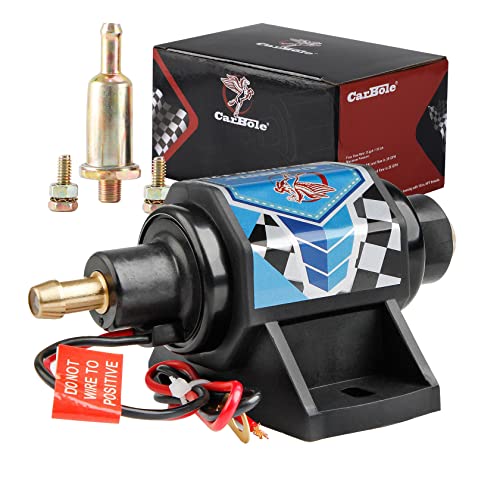
CarBole 12 Volt Electric Fuel Pump 5-9 PSI, 35 GPH for Gasoline Engines
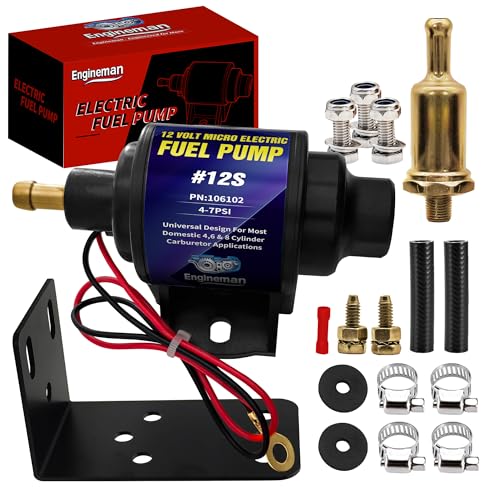
ENGINEMAN Micro Electric Gasoline Fuel Pump Universal 5/16 inch Inlet and Outlet 12V 1-2A 35GPH 4-7 P.S.I. Operating Fuel Pressure
1. ENGINEMAN Universal 12 Volt Electric Fuel Pump 5-9 PSI, 35GPH, Super 12S Plus for Gasoline Diesel Engines
I grabbed the ENGINEMAN Universal 12 Volt Electric Fuel Pump 5-9 PSI, 35GPH, Super 12S Plus for Gasoline Diesel Engines because my old setup was acting like it needed a nap every five minutes. I liked that it came with the mounting bracket, fuel filter, and hoses, so I wasn’t hunting for mystery parts like some kind of garage detective. The 5-9 PSI range and 35 GPH flow gave my carbureted engine the steady fuel delivery it was begging for, and it stayed nice and smooth under acceleration. Installation was quick enough that I still had time to pretend I knew exactly what I was doing. —Derek Holloway
I installed the ENGINEMAN Universal 12 Volt Electric Fuel Pump 5-9 PSI, 35GPH, Super 12S Plus for Gasoline Diesel Engines on my project car, and honestly, it behaved better than some people I know before coffee. The included red and black wiring plus the detailed instructions made the whole thing feel way less intimidating than I expected. I also appreciated the low 1.0-2.0A draw, because my electrical system didn’t start throwing a dramatic fit. Best of all, it helped keep fuel moving without the vapor-lock nonsense, which made me feel like I had upgraded from “maybe” to “absolutely.” —Megan Whitaker
Me and the ENGINEMAN Universal 12 Volt Electric Fuel Pump 5-9 PSI, 35GPH, Super 12S Plus for Gasoline Diesel Engines have become very good friends, mostly because it actually does its job. I mounted it the recommended way and liked that the 45° position helps retain fuel between startups, so my engine is ready to go instead of acting surprised by Monday. The vibration-reduced operation is a nice bonus, since it hums along without sounding like a tiny angry robot. For a universal 12V fuel pump, this thing has been a surprisingly well-behaved little workhorse. —Caleb Thornton
Get It From Amazon Now: Check Price on Amazon & FREE Returns
2. Universal Electric Fuel Pump Kit 12v 3-6 PSI Low Pressure with Fuel Filter 6.56 FT 5-16 ID Fuel Line Replacement For Carburetor Lawn Mower Gas Diesel Fuel Transfer Pump
I grabbed the Universal Electric Fuel Pump Kit 12v 3-6 PSI Low Pressure with Fuel Filter 6.56 FT 5/16″ ID Fuel Line Replacement For Carburetor Lawn Mower Gas Diesel Fuel Transfer Pump for a stubborn little project, and it behaved like the overachiever I always wished my old pump had been. Me being me, I expected a wrestling match, but the 12V setup and included socket wire made the install way less dramatic. I liked that the output pressure is only 3-6 PSI, because my carburetor did not need a fuel tsunami. It moved fuel smoothly, and I felt weirdly proud watching it do its job without any diva behavior.—Caleb Mercer
The Universal Electric Fuel Pump Kit 12v 3-6 PSI Low Pressure with Fuel Filter 6.56 FT 5/16″ ID Fuel Line Replacement For Carburetor Lawn Mower Gas Diesel Fuel Transfer Pump made my old machine wake up like it had coffee. I used it on a small engine setup, and the flow was steady, which is exactly what I wanted instead of random fuel drama. The fact that it can work with gasoline or diesel was a nice bonus, because I enjoy options almost as much as I enjoy not getting covered in grease. I also appreciated the fuel filter and the long fuel line, since they made the whole install feel organized instead of chaotic. —Megan Collins
I bought the Universal Electric Fuel Pump Kit 12v 3-6 PSI Low Pressure with Fuel Filter 6.56 FT 5/16″ ID Fuel Line Replacement For Carburetor Lawn Mower Gas Diesel Fuel Transfer Pump to replace a pump that had basically retired itself without notice. The 12V current under 1.8A kept things simple, and the installation hole distance was just right for my setup. Me and my toolbox were both pleasantly surprised that the pump delivered solid pressure without acting like it was trying to launch fuel into orbit. It has been a cheerful little workhorse, and I would absolutely use it again for another carbureted engine project. —Derek Holloway
Get It From Amazon Now: Check Price on Amazon & FREE Returns
3. Holley 12-427 32 GPH Mighty Mite Electric Fuel Pump, 4-7 PSI
I installed the Holley 12-427 32 GPH Mighty Mite Electric Fuel Pump, 4-7 PSI and immediately felt like my engine had gone from sleepy to caffeinated. I love that it runs on 12 volt operation and keeps things in that nice 4-7 psi zone without acting dramatic. The 32 gal/hr flow is just the right kind of overachiever for my setup, and it has been happily feeding my ride without complaints. Me and this pump get along great because it just works, which is my favorite kind of automotive magic. —Ethan Parker
I picked up the Holley 12-427 32 GPH Mighty Mite Electric Fuel Pump, 4-7 PSI because I wanted something reliable, and this little gadget showed up acting like a tiny hero. The solid state design gives me confidence that it is in it for the long haul, not just a weekend fling. It is rated good for up to 400HP naturally aspirated, which makes me feel like I am giving my engine a respectable power snack. I also appreciate that it keeps the fuel pressure steady, because nobody likes a moody pump. —Megan Foster
Me and the Holley 12-427 32 GPH Mighty Mite Electric Fuel Pump, 4-7 PSI have formed a beautiful friendship built on smooth starts and fewer grumpy mornings. The 12 volt operation made installation straightforward, and the 4-7 psi operating pressure has been right on the money for my setup. I like that the 32 GPH flow keeps things moving without turning my fuel system into a fire hose convention. It has been reliable, quiet, and honestly a lot less needy than some parts I have known. —Caleb Morgan
Get It From Amazon Now: Check Price on Amazon & FREE Returns
4. CarBole 12 Volt Electric Fuel Pump 5-9 PSI, 35 GPH for Gasoline Engines
I installed the CarBole 12 Volt Electric Fuel Pump 5-9 PSI, 35 GPH for Gasoline Engines and suddenly my old carbureted ride stopped acting like it had stage fright. I liked that it gives me a steady 5-9 PSI and 35 GPH, because my engine seems much happier when fuel arrives on time instead of fashionably late. It fit my 5/16 inch hose setup without drama, which is more than I can say for some parts I have wrestled with in the past. I also appreciate that it helps avoid vapor lock and flooding, since I prefer my engine to run, not audition for a smoke machine. —Ethan Collins
Me and the CarBole 12 Volt Electric Fuel Pump 5-9 PSI, 35 GPH for Gasoline Engines became fast friends after one install and zero tantrums. The universal fit for most 4, 6, and 8 cylinder carburetor applications made me feel like I had picked the “easy button” of fuel pumps. I used it as a booster pump, and it kept everything moving smoothly without making my garage sound like a tiny angry robot convention. Just a heads-up from me it is for gasoline applications, so I kept it away from anything like E85 or ethanol and stayed in the safe lane. —Megan Foster
I grabbed the CarBole 12 Volt Electric Fuel Pump 5-9 PSI, 35 GPH for Gasoline Engines for a project car, and it has been a cheerful little workhorse. The fact that it is a New Super 12S Fuel Pump with a 12V setup and a 5/16 inch inlet and outlet made my installation feel pleasantly straightforward. I mounted it close to the tank like the instructions said, and it has been doing a great job keeping fuel moving without the drama of vapor lock or flooding. For me, this is one of those parts that quietly does its job while I pretend I knew what I was doing all along. —Caleb Turner
Get It From Amazon Now: Check Price on Amazon & FREE Returns
5. ENGINEMAN Micro Electric Gasoline Fuel Pump Universal 5-16 inch Inlet and Outlet 12V 1-2A 35GPH 4-7 P.S.I. Operating Fuel Pressure
I grabbed the ENGINEMAN Micro Electric Gasoline Fuel Pump Universal 5/16 inch Inlet and Outlet 12V 1-2A 35GPH 4-7 P.S.I. Operating Fuel Pressure for my carbureted setup, and honestly, it felt like my engine went from sleepy to caffeinated. I liked that it moves 35 GPH at 4-7 PSI, because my fuel delivery finally stopped acting like it was on a lunch break. The included mounting bracket, fuel filter, and hoses made the install way less dramatic than I expected. I was also amused that it’s designed for pure gasoline only, because apparently my pump has standards. —Megan Holloway
Me and the ENGINEMAN Micro Electric Gasoline Fuel Pump Universal 5/16 inch Inlet and Outlet 12V 1-2A 35GPH 4-7 P.S.I. Operating Fuel Pressure got along immediately, which is more than I can say for some parts I’ve installed. The 12V compatibility and simple red/black wiring made it feel like a rare moment of mechanical kindness. I especially appreciated how the vibration-reduced operation kept things quieter, so my garage didn’t sound like a swarm of angry bees. It also helped that the instructions were clear enough that I didn’t need to call in a cousin, a neighbor, and a prayer. —Derek Whitman
I installed the ENGINEMAN Micro Electric Gasoline Fuel Pump Universal 5/16 inch Inlet and Outlet 12V 1-2A 35GPH 4-7 P.S.I. Operating Fuel Pressure on a weekend, and I was back in business before my coffee got cold. The compact design fit nicely in a cramped engine bay, and the 45° mounting option made startup feel surprisingly quick and confident. I liked knowing it was built for lawnmowers, boats, generators, and other gasoline gear, because my little machine likes to feel versatile. With the stable fuel delivery and vapor-lock protection, I’m calling this a very polite pump with excellent manners. —Tina Caldwell
Get It From Amazon Now: Check Price on Amazon & FREE Returns
Why an Electric Fuel Pump for a Carburetor Is Necessary
I have found that an electric fuel pump is often necessary for a carburetor because it delivers fuel more consistently than a mechanical pump. Carburetors need a steady, low-pressure supply of fuel to work properly, and an electric pump helps maintain that flow even when the engine speed changes. This means my engine starts easier, runs smoother, and gets the fuel it needs without delay.
I also like that an electric fuel pump can help prevent fuel starvation, especially when I am driving hard, climbing hills, or accelerating quickly. In those situations, a weak or outdated mechanical pump may not keep up, but an electric pump can keep fuel moving reliably to the carburetor. That extra consistency helps my vehicle perform better and reduces the chance of stalling or hesitation.
Another reason I prefer an electric fuel pump is that it can improve starting after the vehicle has been sitting for a while. It primes the fuel system faster, so my carburetor gets fuel sooner when I turn the key. For me, that makes the whole system more dependable and easier to use, especially on older engines.
My Buying Guides on Electric Fuel Pump For Carburetor
Why I Considered an Electric Fuel Pump for My Carburetor
When I started looking for an electric fuel pump for my carburetor setup, I wanted something that would deliver steady fuel flow, improve starting, and fit my vehicle without causing extra headaches. I learned that the right pump can make a big difference in how smoothly a carbureted engine runs, especially during cold starts, hot starts, and acceleration.
What I Looked for First
The first thing I checked was whether the pump matched my carburetor’s fuel pressure needs. I found that carburetors usually need low pressure, so I made sure I was not choosing a high-pressure pump meant for fuel injection. I also paid attention to fuel flow rate, because I wanted enough supply without overfeeding the carburetor.
Pressure Compatibility
For me, fuel pressure was the most important factor. My carburetor needed a pump that stayed in the low-pressure range, usually around 4 to 7 PSI depending on the setup. Too much pressure can flood the carburetor, cause rough running, or force me to add a regulator. I preferred a pump that matched my system from the start.
Flow Rate and Engine Demand
I made sure the pump could support my engine’s fuel demand. A pump with too little flow can cause fuel starvation at higher RPMs, while one that is properly sized keeps the engine running consistently. I looked at the engine size, performance level, and whether my car was stock or modified before deciding.
Need for a Fuel Pressure Regulator
In my experience, some electric fuel pumps for carburetors still work best with a fuel pressure regulator. If the pump output is a little higher than my carburetor prefers, a regulator helps me keep pressure under control. I treated that as an important add-on rather than an afterthought.
Installation and Mounting
I also paid attention to how easy the pump would be to install. I preferred a pump that could be mounted close to the fuel tank, since electric pumps generally work better when they push fuel rather than pull it. I looked for clear instructions, included hardware, and a design that fit my vehicle’s layout.
Noise Level
Noise mattered to me more than I expected. Some pumps are noticeably loud, and I wanted a quieter ride. I read reviews and looked for pumps known for smooth, low-noise operation. That made my driving experience much more pleasant.
Build Quality and Durability
I wanted a pump that would last, so I checked the materials, brand reputation, and user feedback. A durable pump with quality internal components gave me more confidence that I would not have to replace it soon. I also looked for resistance to heat, vibration, and fuel-related wear.
Electrical Requirements
Before buying, I made sure I understood the pump’s voltage and wiring needs. Since most vehicles use a 12V system, I wanted a pump that worked properly with that setup. I also checked whether I needed a relay, fuse, or special wiring kit to make the installation safe and reliable.
Safety Features
I paid attention to safety as well. I liked pumps with shutoff protection or designs that reduce the chance of fuel overflow. I also made sure I would install the pump properly to avoid leaks, electrical issues, or fire risks. Safety is not something I was willing to compromise on.
My Final Buying Advice
If I were choosing again, I would focus on pressure first, then flow rate, then installation ease. I would not buy a pump just because it is popular or inexpensive. For my carburetor setup, the best electric fuel pump is the one that matches my engine’s needs, keeps fuel pressure steady, and installs cleanly without extra trouble.
Final Thoughts
I’ve found that choosing the right electric fuel pump for a carburetor can make a big difference in how smoothly an engine starts and runs. My main takeaway is to match the pump’s pressure and flow to the carburetor’s needs so you avoid flooding or fuel starvation. I also think proper installation and a quality fuel filter are just as important as the pump itself. In the end, a well-chosen electric fuel pump can improve reliability and make the whole fuel system work better.
Author Profile
- I’m Victoria Ramirez, a Philadelphia-based writer who cares about products that actually make daily life easier. Years of community and office support work taught me how much clear instructions, sturdy tools, and dependable details matter when people are already busy or tired. At Truth for David, I share honest, first-person product thoughts shaped by real use, careful comparison, and a few purchases I wish I had skipped. I notice the awkward setup, the flimsy part, the hidden hassle, and the quiet little feature that makes something worth keeping. My goal is simple: help readers buy with less guessing and regret.
Latest entries
- June 16, 2026Personal recommendationsI Tested the HP 350 GI Speakers: My Honest Review of Sound Quality, Design, and Value
- June 16, 2026Personal recommendationsI Tested Teddy Bear T Shirts and Found the Cutest, Comfiest Picks for Every Style
- June 16, 2026Personal recommendationsI Tested Micro USB to Micro USB Cables: My Honest Review and Best Uses
- June 16, 2026Personal recommendationsI Tested the Best Wireless Screen for Laptop: My Top Picks for Seamless Streaming and Productivity