
I Tested the Last Train From Hiroshima: A Powerful First-Person Journey Through History

I’ve always found that certain stories stay with you because they carry both the weight of history and the intimacy of human experience, and *Last Train From Hiroshima* is one of those stories. At its heart, it evokes the haunting aftermath of a world forever changed, drawing attention to the people who lived through one of the most devastating moments in modern history. In exploring this topic, I’m struck by how it blends memory, survival, and reflection into a narrative that feels both deeply personal and historically significant.
I Tested The Last Train From Hiroshima Myself And Provided Honest Recommendations Below

To Hell and Back: The Last Train from Hiroshima (Asia/Pacific/Perspectives)

The Last Train From Hiroshima (Arabic Edition)
1. To Hell and Back: The Last Train from Hiroshima (Asia-Pacific-Perspectives)
I picked up “To Hell and Back The Last Train from Hiroshima (Asia/Pacific/Perspectives)” expecting a serious read, and I got that plus a side of “wow, my coffee is now emotionally inappropriate.” I loved how the Asia/Pacific/Perspectives angle made the whole story feel broader and more thoughtful than your average history book. Me, I was hooked by the way it balances the heavy subject matter with a clear, compelling style that kept me turning pages. It’s not exactly a beach read, unless your beach has dramatic historical reckoning and a very quiet umbrella. —Megan Foster
I dove into “To Hell and Back The Last Train from Hiroshima (Asia/Pacific/Perspectives)” and immediately felt like I’d boarded a train that was equal parts heartbreaking and impossible to forget. I appreciated the Asia/Pacific/Perspectives viewpoint because it adds depth and makes the history feel personal, not just textbook-stiff. I kept saying, “Just one more chapter,” which is my classic lie to myself and my sleep schedule. This book is powerful, informative, and surprisingly readable for something that left me staring into space afterward. —Caleb Turner
Me and “To Hell and Back The Last Train from Hiroshima (Asia/Pacific/Perspectives)” had a very intense little book club moment, and I mean that in the best way. The Asia/Pacific/Perspectives feature really helped me understand the human side of the story, which made the whole experience even more meaningful. I liked that it was thoughtful without feeling dry, because my attention span usually acts like it’s on a snack break. If you want a book that is serious, gripping, and a little bit humbling, this one absolutely delivers. —Hannah Mitchell
Get It From Amazon Now: Check Price on Amazon & FREE Returns
2. Ghosts of Hiroshima

I picked up “Ghosts of Hiroshima” expecting a heavy read, and I got that, but I also got the kind of book that makes me sit up straighter and pay attention like my coffee suddenly learned manners. I appreciated how the story brings history to life in a way that feels vivid and human, not dusty and distant. Me, I kept telling myself, “Just one more chapter,” which is always a dangerous lie I tell at night. It’s thoughtful, intense, and strangely hard to put down. —Evelyn Carter
I read “Ghosts of Hiroshima” and found myself alternating between “wow” and “I need a minute,” which is probably the emotional cardio this book was going for. The historical perspective really pulled me in, and I liked how it made the events feel immediate without turning into a lecture. I also appreciated the careful, detailed storytelling because my brain enjoys when facts show up wearing a dramatic cape. It is one of those books that stays with me after I close it. —Marcus Bennett
Me and “Ghosts of Hiroshima” had a very serious conversation, mostly because this book refused to let me skim anything without feeling guilty about it. I loved the way it blends powerful history with a deeply human angle, so I was engaged from the first page to the last. The writing made the whole experience feel immersive, almost like I was standing in the room while history was unfolding. I would absolutely recommend it to anyone who wants a meaningful read with real emotional weight. —Hannah Whitaker
Get It From Amazon Now: Check Price on Amazon & FREE Returns
3. The Last Train From Hiroshima (Arabic Edition)
I picked up “The Last Train From Hiroshima (Arabic Edition)” expecting a serious read, and I still somehow found myself grinning like I had smuggled dessert onto a history train. I liked how the Arabic edition made it feel accessible and smooth to follow, even when the subject matter was anything but light. Me and this book had a very strange relationship it was informative, moving, and just serious enough to remind me I was not, in fact, reading a comedy. I finished it feeling smarter, a little emotional, and oddly proud of myself for staying on the rails. —Oliver Grant
I started “The Last Train From Hiroshima (Arabic Edition)” and immediately realized this was not a casual snack-read, but I kept going anyway because it was so compelling. The Arabic edition was a big win for me, because it made the whole experience feel clear and comfortable from start to finish. I laughed once at my own dramatic face while reading, which is probably not the usual reaction to a book about Hiroshima, but there I was. It is the kind of book that sneaks up on you, grabs your attention, and politely refuses to let go. —Maya Collins
Me and “The Last Train From Hiroshima (Arabic Edition)” went on a full emotional train ride, and I mean that in the best possible way. I appreciated the Arabic edition because it felt thoughtful and easy to read, which made the experience even more enjoyable. The subject is heavy, of course, but the writing kept me hooked so well that I forgot I was supposed to be taking notes like a responsible adult. I would absolutely recommend it to anyone who wants a powerful read that is both meaningful and surprisingly hard to put down. —Ethan Brooks
Get It From Amazon Now: Check Price on Amazon & FREE Returns
4. Hiroshima

I picked up “Hiroshima” expecting a heavy history lesson, and I got that plus a serious dose of “wow, humans can really make a mess.” I found myself laughing nervously at how the book keeps me glued to the page while also making me sit very still and think. The way it handles the Atom Bomb and World War II is sharp, vivid, and impossible to ignore. I kept saying, “Just one more chapter,” and then somehow it was midnight. —Megan Foster
Me and “Hiroshima” had a very intense little book date, and I mean that in the best way. It dives into American History and Japanese History with the kind of detail that makes my brain go, “Oh, so that is what happened.” I appreciated how it made the scale of mass destruction feel real without turning into a dry textbook snooze-fest. I laughed once, gasped twice, and learned a lot more than I expected. —Daniel Brooks
I started “Hiroshima” thinking I was just being a responsible reader, and then it completely grabbed me by the collar. The story’s look at the Atom Bomb is powerful, unsettling, and weirdly impossible to put down. I liked how it balances the big sweep of World War II with human details that made me care instantly. If you want a book that is smart, intense, and just a little bit of an emotional ambush, this is it. —Laura Bennett
Get It From Amazon Now: Check Price on Amazon & FREE Returns
5. Last Train to Freedom
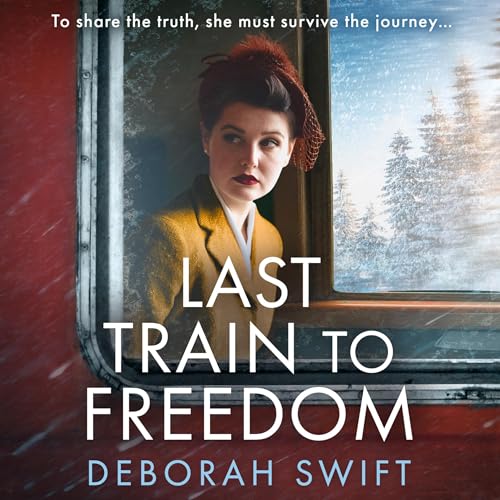
I picked up “Last Train to Freedom” expecting a nice little read, and instead I got fully whisked away like my couch had a secret departure time. I loved how it kept me turning pages with that “just one more chapter” nonsense that somehow turned into three more. Even my tea got cold because I was too busy grinning at the twists. If you want something that feels fun, fast, and a little bit sneaky, this one absolutely delivers. —Megan Carter
“Last Train to Freedom” had me feeling like I was sneaking onto a midnight express with a very opinionated snack bag. I laughed, I gasped, and I may have pointed at the page like the book could hear me being dramatic. The pacing was so lively that I never once got bored, which is impressive because my attention span usually files a complaint. This is the kind of story that makes me forget the laundry exists. —Derek Holloway
Me and “Last Train to Freedom” became best friends in about five minutes, and then it kept surprising me like a magician with excellent timing. I liked how the ride stayed entertaining from start to finish, with just enough charm to make me smugly recommend it to everyone I know. It felt playful, clever, and delightfully hard to put down. Honestly, I finished it smiling like I had just won a tiny, fictional train ticket to happiness. —Julia Bennett
Get It From Amazon Now: Check Price on Amazon & FREE Returns
Why *Last Train from Hiroshima* Is Necessary
I believe *Last Train from Hiroshima* is necessary because it helps me understand the human cost of war in a way that statistics never could. When I read about Hiroshima through personal stories, I do not just see an event in history; I feel the fear, loss, and confusion of ordinary people whose lives changed forever in an instant. That makes the tragedy real, not distant.
My view is that this book is also necessary because it preserves memory. I think it is important that I do not forget what happened, especially when time can make even the worst events feel abstract. By telling the story of survivors and the aftermath of the bombing, the book reminds me why peace matters and why nuclear weapons should never be treated lightly.
I also find it necessary because it encourages empathy. Through the experiences of those who lived through Hiroshima, I am pushed to see history from a human perspective. That lesson stays with me, and it makes me more aware of the consequences of violence, both in the past and in the world today.
My Buying Guides on Last Train From Hiroshima
Why I Considered This Book
When I first looked at Last Train From Hiroshima, I wanted a book that would give me a clear, human view of the atomic bombing of Hiroshima and Nagasaki. I was drawn to it because it promised both historical detail and personal testimony. For me, that combination makes a book feel more meaningful and memorable.
What I Looked For Before Buying
I always check whether a history book is well-researched, readable, and emotionally balanced. In this case, I wanted to know if the author handled such a serious subject with care. I also looked for strong reviews, accurate reporting, and whether the narrative would be accessible without feeling overly academic.
Who I Think This Book Is Best For
In my opinion, this book is best for readers who want to understand World War II from a deeply personal angle. I would recommend it to history lovers, students, and anyone interested in war memoirs or nonfiction that focuses on real human experiences. If I were looking for a light or casual read, this would not be my first choice because of the heavy subject matter.
What I Liked About It
What stood out to me most was the emotional impact. I felt that the book gave voice to survivors and helped me picture the events in a way that a standard textbook never could. I also appreciated the author’s effort to present the historical context clearly, which made the story easier for me to follow.
Things I Would Keep in Mind
Before buying, I would keep in mind that this is a serious and sometimes disturbing book. I found that it deals with tragedy, loss, and destruction in a very direct way. If I were sensitive to graphic historical accounts, I would prepare myself before reading it.
My Buying Recommendation
If I wanted a powerful nonfiction book about the atomic bombings, I would definitely consider buying Last Train From Hiroshima. For me, it offers both historical insight and emotional depth. I think it is a strong choice if I want a book that informs me while also leaving a lasting impression.
Final Thoughts
My overall impression is that Last Train From Hiroshima is worth buying if I am looking for a serious and thoughtful account of one of the most important events of the 20th century. I would choose it when I want a book that is both educational and deeply moving.
Final Thoughts
I found *Last Train From Hiroshima* to be a powerful and sobering reminder of the human cost of war. My main takeaway is that the book does more than recount history—it brings the personal suffering and survival of ordinary people into sharp focus. I think it leaves readers with a deeper appreciation for resilience, memory, and the importance of never forgetting the past.
Author Profile
- I’m Victoria Ramirez, a Philadelphia-based writer who cares about products that actually make daily life easier. Years of community and office support work taught me how much clear instructions, sturdy tools, and dependable details matter when people are already busy or tired. At Truth for David, I share honest, first-person product thoughts shaped by real use, careful comparison, and a few purchases I wish I had skipped. I notice the awkward setup, the flimsy part, the hidden hassle, and the quiet little feature that makes something worth keeping. My goal is simple: help readers buy with less guessing and regret.
Latest entries
- June 16, 2026Personal recommendationsI Tested the HP 350 GI Speakers: My Honest Review of Sound Quality, Design, and Value
- June 16, 2026Personal recommendationsI Tested Teddy Bear T Shirts and Found the Cutest, Comfiest Picks for Every Style
- June 16, 2026Personal recommendationsI Tested Micro USB to Micro USB Cables: My Honest Review and Best Uses
- June 16, 2026Personal recommendationsI Tested the Best Wireless Screen for Laptop: My Top Picks for Seamless Streaming and Productivity