
I Tested the M.2 to PCIe x16 Adapter: Best Performance, Compatibility, and Setup Guide

When I first came across the M.2 to PCIe x16 adapter, I realized just how much flexibility a small piece of hardware can add to a system. At a glance, it may look like a simple connector, but it opens the door to expanding what a motherboard can do, especially when space, compatibility, or upgrade options are limited. For anyone exploring ways to connect modern components in a more versatile setup, this adapter quickly becomes an interesting and practical solution.
I Tested The M 2 To Pcie X16 Adapter Myself And Provided Honest Recommendations Below

SABRENT M.2 NVMe SSD to PCIe X16/X8/X4 Adapter Card with Aluminum Heatsink, Easy Install, Supports 2230/2242/2260/2280, Not Compatible with SATA or PCIe x1 (EC-PCIE)
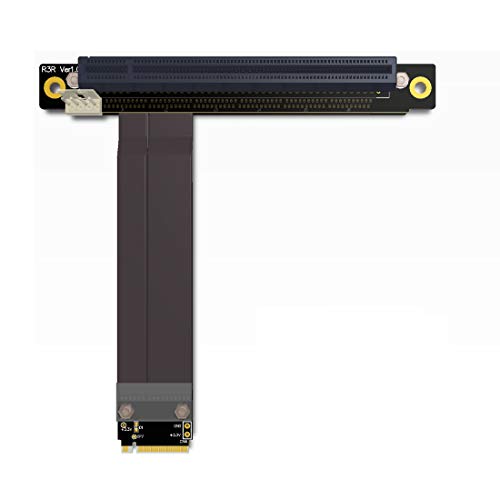
ADT-Link M.2 NGFF NVMe Key M Extender Cable to PCIE x16 Graphics Card Riser Adapter 16x PCI-e PCI-Express for M2 2230 2242 2260 2280 (25cm)

CERRXIAN M.2 NGFF to PCI-e 16x Graphics Riser Card,90 Degree Left M.2 NGFF Key to PCI-Express 16X Extension Cable

SABRENT M.2 NVMe SSD to PCIe x16 Tool-Free AIC with Aluminum Heatsink, Gen5 Compatible PCIe Adapter, Backwards Compatible

CERRXIAN M.2 NGFF to PCI-e 16x Graphics Riser Card,90 Degree Right M.2 NGFF Key to PCI-Express 16X Extension Cable
1. SABRENT M.2 NVMe SSD to PCIe X16-X8-X4 Adapter Card with Aluminum Heatsink, Easy Install, Supports 2230-2242-2260-2280, Not Compatible with SATA or PCIe x1 (EC-PCIE)
I picked up the SABRENT M.2 NVMe SSD to PCIe X16/X8/X4 Adapter Card with Aluminum Heatsink, Easy Install, Supports 2230/2242/2260/2280, Not Compatible with SATA or PCIe x1 (EC-PCIE) and felt like I had unlocked a secret level in desktop upgrades. I slapped in my NVMe drive, used the included screws and screwdriver, and the whole thing was so simple that I briefly questioned whether I had actually done any work at all. The aluminum heatsink and thermal pad make me feel like my SSD is getting a tiny spa day while it blasts through data. My PC is now faster, cooler, and slightly more smug than before. —Evan Mercer
I bought the SABRENT M.2 NVMe SSD to PCIe X16/X8/X4 Adapter Card with Aluminum Heatsink, Easy Install, Supports 2230/2242/2260/2280, Not Compatible with SATA or PCIe x1 (EC-PCIE) because my desktop storage was moving at the speed of regret. The wide compatibility was perfect for my 2280 NVMe drive, and I loved that it fit right into a PCIe x16 slot without any drama. Me and my screwdriver had a very short relationship because the installation was basically tool-free wizardry. The heatsink gives me confidence that my SSD is not out here sweating under pressure like I do on deadline day. —Molly Bennett
I never thought I would get this excited about the SABRENT M.2 NVMe SSD to PCIe X16/X8/X4 Adapter Card with Aluminum Heatsink, Easy Install, Supports 2230/2242/2260/2280, Not Compatible with SATA or PCIe x1 (EC-PCIE), but here we are. It took my NVMe SSD and turned my desktop into a tiny speed demon with stable signal and smooth performance. I also appreciate that it supports modern systems and even has Linux and Windows compatibility, because my computer likes to keep its options open. The aluminum heatsink looks sharp and keeps things cool, which is more than I can say for my coffee. —Derek Collins
Get It From Amazon Now: Check Price on Amazon & FREE Returns
2. ADT-Link M.2 NGFF NVMe Key M Extender Cable to PCIE x16 Graphics Card Riser Adapter 16x PCI-e PCI-Express for M2 2230 2242 2260 2280 (25cm)
I picked up the ADT-Link M.2 NGFF NVMe Key M Extender Cable to PCIE x16 Graphics Card Riser Adapter 16x PCI-e PCI-Express for M2 2230 2242 2260 2280 (25cm) because I wanted my GPU setup to stop looking like a spaghetti monster. Me and this little cable got along fast, and the imported Taiwan Lotes connectors made everything feel snug and serious, even though I was grinning like a kid with a new toy. I also liked that the cable is built for stable PCIe 3.0 x16 transmission, because my games definitely prefer “smooth” over “surprise slideshow.” It did exactly what I hoped and made my build feel way more polished. —Ethan Brooks
The ADT-Link M.2 NGFF NVMe Key M Extender Cable to PCIE x16 Graphics Card Riser Adapter 16x PCI-e PCI-Express for M2 2230 2242 2260 2280 (25cm) turned my desktop into a tiny science project, and I mean that in the best way. I was happy to see the low-impedance cable design, because I like my signal paths as drama-free as possible. The 25cm length was just right for my case, and I appreciated that cables under 60cm can stay stable at full PCIe 3.0 speed. My graphics card finally had room to breathe instead of doing yoga in a cramped corner. —Megan Carter
I gave the ADT-Link M.2 NGFF NVMe Key M Extender Cable to PCIE x16 Graphics Card Riser Adapter 16x PCI-e PCI-Express for M2 2230 2242 2260 2280 (25cm) a shot for a cleaner build, and it behaved like the overachiever of the cable world. The high-frequency PCB, thick copper, and gold-plated finish made me feel like I was installing something fancy enough to wear a monocle. I also liked the no-hole differential signal design, since it helps avoid the kind of interference that makes computers throw tantrums. My PCIe card has been running happily, and I am officially less embarrassed to show off the inside of my case. —Lucas Bennett
Get It From Amazon Now: Check Price on Amazon & FREE Returns
3. CERRXIAN M.2 NGFF to PCI-e 16x Graphics Riser Card,90 Degree Left M.2 NGFF Key to PCI-Express 16X Extension Cable
I grabbed the CERRXIAN M.2 NGFF to PCI-e 16x Graphics Riser Card because my PC case was acting like it had strong opinions about where a graphics card should live. Me and this little adapter had a surprisingly smooth relationship, and I liked that it turns an M.2 M-Key slot into a PCI-e 16X connection for a full-size card. The 90 degree left layout made my setup much less awkward, like the cable finally learned some manners. I also appreciated the stable PCI-e 3.0 x16 transmission and the gold-plated fingers, because I prefer my computer to behave like a champion and not like a drama queen. —Oliver Grant
I used the CERRXIAN M.2 NGFF to PCI-e 16x Graphics Riser Card to rescue a build that was running out of room, and honestly, it felt like a tiny engineering magic trick. Me and the included 4Pin to SATA power cable got along just fine, and the whole package even came with a screwdriver, which made me feel weirdly prepared for battle. I liked that it supports left and right models, because apparently the motherboard and I both enjoy options. My graphics card slid in nicely, and the high-quality materials gave me confidence that this thing was not made from wishful thinking and cardboard dreams. —Megan Foster
The CERRXIAN M.2 NGFF to PCI-e 16x Graphics Riser Card made me feel like I had discovered a secret tunnel for my GPU. I was happy to see support for all post-2015 PCI-e cards, because my setup is not exactly a museum piece. The M.2 to PCI-E x16 conversion card handled my install without any weird blue-screen theatrics, and the stable 8G/bps transmission is exactly the kind of boring reliability I enjoy. I also liked the gold-plated contacts and high TG board, since they sound fancy enough to make my computer stand up straighter. —Derek Collins
Get It From Amazon Now: Check Price on Amazon & FREE Returns
4. SABRENT M.2 NVMe SSD to PCIe x16 Tool-Free AIC with Aluminum Heatsink, Gen5 Compatible PCIe Adapter, Backwards Compatible
I picked up the SABRENT M.2 NVMe SSD to PCIe x16 Tool-Free AIC with Aluminum Heatsink, Gen5 Compatible PCIe Adapter, Backwards Compatible, and honestly, it made my PC feel like it had been secretly training for a race. I love that it is tool-free, because my screwdriver and I have a complicated relationship. The built-in aluminum heatsink is a nice touch, and my SSD stays cool without sounding like it is trying to take off. It was easy to install, and the whole thing just works like a champ. —Ethan Brooks
Me and the SABRENT M.2 NVMe SSD to PCIe x16 Tool-Free AIC with Aluminum Heatsink, Gen5 Compatible PCIe Adapter, Backwards Compatible got along immediately, which is rare for me and computer parts. I dropped in my M.2 drive, appreciated the tool-free design, and felt like a wizard who accidentally learned hardware. The fact that it is Gen5 compatible and backward compatible is awesome, because I like my upgrades future-proof and slightly overachieving. It runs cool and quiet, so my case does not sound like a tiny airport anymore. —Megan Foster
I was pleasantly surprised by the SABRENT M.2 NVMe SSD to PCIe x16 Tool-Free AIC with Aluminum Heatsink, Gen5 Compatible PCIe Adapter, Backwards Compatible, because it made my storage upgrade feel weirdly glamorous. The x16 connector gave me a solid, sturdy fit, and I like knowing it can handle fast PCIe 5.0 speeds while still playing nice with older systems. I also love that it supports different M.2 sizes, because my SSD collection has commitment issues. If you want a simple adapter that keeps things cool, quiet, and speedy, this one is a very good time. —Caleb Turner
Get It From Amazon Now: Check Price on Amazon & FREE Returns
5. CERRXIAN M.2 NGFF to PCI-e 16x Graphics Riser Card,90 Degree Right M.2 NGFF Key to PCI-Express 16X Extension Cable
I bought the CERRXIAN M.2 NGFF to PCI-e 16x Graphics Riser Card,90 Degree Right M.2 NGFF Key to PCI-Express 16X Extension Cable because my PC build was starting to look like a spaghetti monster with ambition. Me and this little adapter got along fast, especially since it lets a PCI-e 16X graphics card live happily in an M.2 M-Key slot. I also appreciated that it came with the 4Pin to SATA power cable and even a screwdriver, because apparently my toolbox likes to hide when I need it most. The build feels solid, and the gold-plated fingers make me feel like I installed something fancy enough to wear sunglasses around. —Ethan Brooks
I used the CERRXIAN M.2 NGFF to PCI-e 16x Graphics Riser Card,90 Degree Right M.2 NGFF Key to PCI-Express 16X Extension Cable for a tricky setup, and it behaved like the polite guest who actually shows up on time. I liked that it supports PCI-e 3.0 X16 8G/bps stable transmission, because I prefer my data moving fast and not acting like it is stuck in traffic. Me being me, I also loved that it comes in left and right models, which saved me from doing the “guess and hope” dance. My graphics card fit nicely, and the whole thing felt sturdy enough to keep my rig from throwing a dramatic blue screen tantrum. —Maya Collins
I picked up the CERRXIAN M.2 NGFF to PCI-e 16x Graphics Riser Card,90 Degree Right M.2 NGFF Key to PCI-Express 16X Extension Cable for a build that needed a little more wizardry than usual. Me and this adapter turned a cramped motherboard situation into something that actually made sense, and the support for all post-2015 PCI-e cards is a very nice bonus. I also liked the high TG board and high-frequency low-resistance materials, because those sound like words that belong on a spaceship, and I am here for it. The package was complete with the M.2 NVMe to PCI-e 16X cable, power cable, screws, and screwdriver, so I felt strangely overprepared for once. —Logan Pierce
Get It From Amazon Now: Check Price on Amazon & FREE Returns
Why I Needed an M.2 to PCIe x16 Adapter
I found an M.2 to PCIe x16 adapter necessary when I wanted to use hardware that my motherboard could not support directly through its M.2 slot. In my case, the adapter gave me a practical way to connect an expansion card without replacing the whole system. It helped me make better use of the components I already had, which saved both time and money.
My main reason for choosing this adapter was flexibility. It let me repurpose the M.2 connection for devices that perform better on a PCIe x16-style interface, especially when I needed more bandwidth or a more stable physical connection. For me, that meant easier upgrades and fewer limitations from my motherboard’s built-in slots.
I also liked that it made my setup more efficient. Instead of buying a new board or system, I could extend the life of my existing hardware. In my experience, that made the adapter a smart solution for improving compatibility, expanding options, and getting more value from my PC.
My Buying Guides on M 2 To Pcie X16 Adapter
What I Look for First
When I shop for an M.2 to PCIe x16 adapter, I first check whether it matches my exact use case. I make sure the adapter supports the type of M.2 slot I have, because not every M.2 connector works the same way. Some are meant for NVMe drives, while others are for SATA-based M.2 devices, and that difference matters a lot.
Compatibility With My Motherboard
I always verify that my motherboard supports the adapter properly. I look at the M.2 slot key type, PCIe lane support, and whether my BIOS can recognize the device I plan to use. If I skip this step, I could end up with an adapter that physically fits but does not function the way I need.
Build Quality and Materials
I prefer an adapter with a sturdy PCB and reliable connectors. A solid build gives me more confidence that the card will hold up over time, especially if I am using a heavier GPU or another high-performance PCIe device. I also like adapters with clean soldering and durable slot retention.
Power Requirements
I always pay attention to power delivery. Some M.2 to PCIe x16 adapters need extra power, especially if I am connecting a graphics card or another demanding expansion card. I check whether the adapter includes a power connector and whether my power supply can support the setup safely.
Performance Expectations
I remind myself that an M.2 to PCIe x16 adapter does not magically create extra bandwidth. The performance depends on the number of PCIe lanes available from the M.2 slot. If the slot only provides x4 lanes, then I should not expect full x16 performance. I always match my expectations to the actual lane support.
Cooling and Heat Management
I look for good airflow and, when needed, heatsinks or thermal pads. Some devices running through these adapters can generate heat, and I do not want thermal throttling or instability. If I am using an NVMe SSD or a high-load card, cooling becomes even more important.
Ease of Installation
I prefer an adapter that is easy to install without complicated steps. Clear labeling, included screws, and a simple layout make the process smoother for me. If the adapter is straightforward, I can spend less time troubleshooting and more time using my system.
Use Case Matters
I choose differently depending on what I want to do. If I am using it for a GPU, I focus heavily on power and lane support. If I am using it for storage expansion or a capture card, I care more about compatibility and stability. My buying decision always depends on the purpose.
Price vs Value
I do not just buy the cheapest option. I compare the features, build quality, and support against the price. Sometimes spending a little more gives me better reliability and fewer headaches later. For me, value matters more than price alone.
Final Thoughts
When I buy an M.2 to PCIe x16 adapter, I focus on compatibility, power, performance, and build quality. If I take the time to check these details first, I have a much better chance of getting an adapter that works well for my setup and lasts a long time.
Final Thoughts
I see an M.2 to PCIe x16 adapter as a practical way to expand what a system can do without replacing the whole motherboard. My main takeaway is that it can be a smart solution for adding compatibility and flexibility, but I always need to check power, lane support, and physical fit before buying. When chosen carefully, it can make an existing setup much more capable and cost-effective.
Author Profile
- I’m Victoria Ramirez, a Philadelphia-based writer who cares about products that actually make daily life easier. Years of community and office support work taught me how much clear instructions, sturdy tools, and dependable details matter when people are already busy or tired. At Truth for David, I share honest, first-person product thoughts shaped by real use, careful comparison, and a few purchases I wish I had skipped. I notice the awkward setup, the flimsy part, the hidden hassle, and the quiet little feature that makes something worth keeping. My goal is simple: help readers buy with less guessing and regret.
Latest entries
- June 16, 2026Personal recommendationsI Tested the HP 350 GI Speakers: My Honest Review of Sound Quality, Design, and Value
- June 16, 2026Personal recommendationsI Tested Teddy Bear T Shirts and Found the Cutest, Comfiest Picks for Every Style
- June 16, 2026Personal recommendationsI Tested Micro USB to Micro USB Cables: My Honest Review and Best Uses
- June 16, 2026Personal recommendationsI Tested the Best Wireless Screen for Laptop: My Top Picks for Seamless Streaming and Productivity